
What Does a Misc Metals Subcontractor Do on a Commercial Job?
Commercial steel
What Does a Misc Metals Subcontractor Do on a Commercial Job?
By Brendon Wash, Modern Steel & Fence, Georgetown, Texas
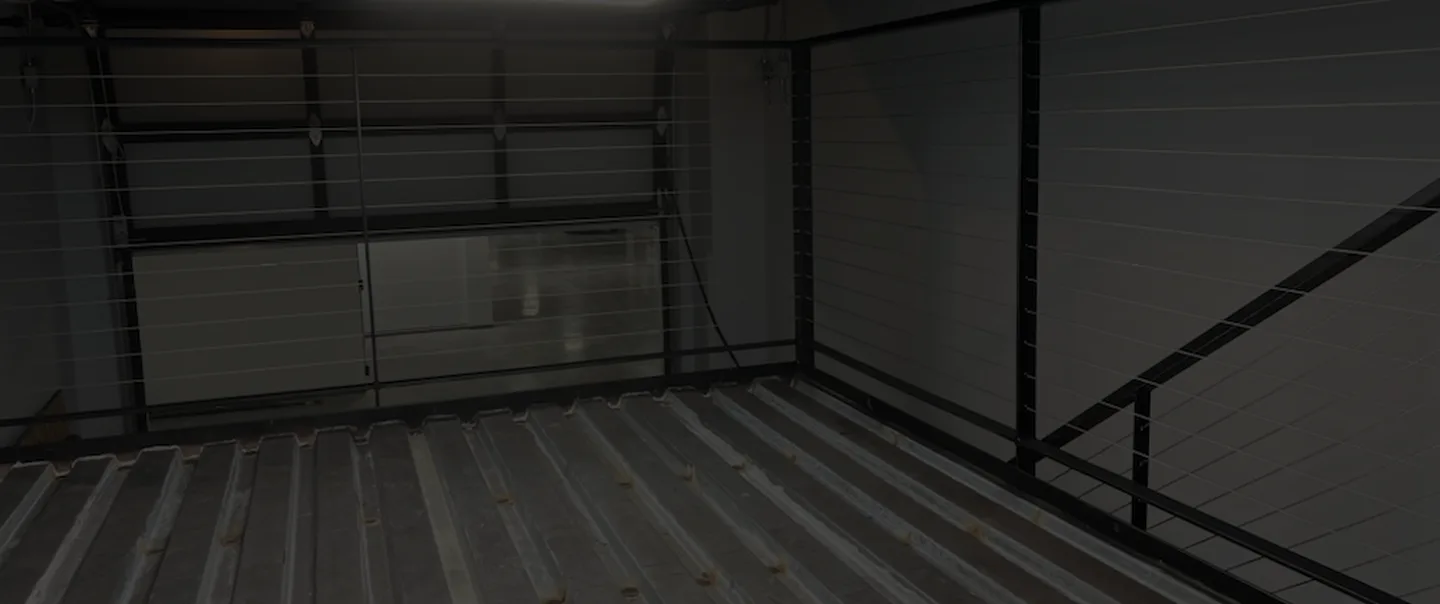
A small retail remodel can call for a steel lintel on the architectural sheets, a pipe bollard on the site plan, and a roof ladder on the mechanical sheets. None of those sheets says who builds them. That gap is where a misc metals subcontractor works.
Two kinds of steel on one building
The steel industry draws this line in writing. The American Institute of Steel Construction’s Code of Standard Practice defines structural steel item by item, and it counts a lintel as structural steel only “if attached to the structural steel frame” (AISC, 2022, Section 2.1). A lintel resting loose on a masonry wall falls outside that list. So does the ladder, the rail and the bollard. Those pieces form a second package. The shop that carries it is the misc metals sub.
What the package holds
Project specifications spell the package out under a heading called Metal Fabrications. The University of Houston’s master specification is a clear example. Its list runs seventeen items, from steel framing for overhead doors and countertops to shelf angles, metal ladders, ladder safety cages, ships’ ladders, floor plate, steel door frames, corner guards, metal bollards and pipe guards (University of Houston, n.d.). Stairs and rails usually sit in their own sections beside it. One shop often carries all of them, because the same hands cut, weld and set them.
Where the work splits
The same specification shows why every line deserves a careful read. It lists loose steel lintels as “furnished, but not installed” under the metals section. The masonry section installs them (University of Houston, n.d.). The fabricator builds the angle. The mason sets it in the wall. Anchor bolts and cast-in inserts follow the same pattern: the steel shop furnishes them, and the concrete crew casts them in. A bid that names which side of each split it covers leaves nothing to argue about on site.
A rail carries a load the code writes down
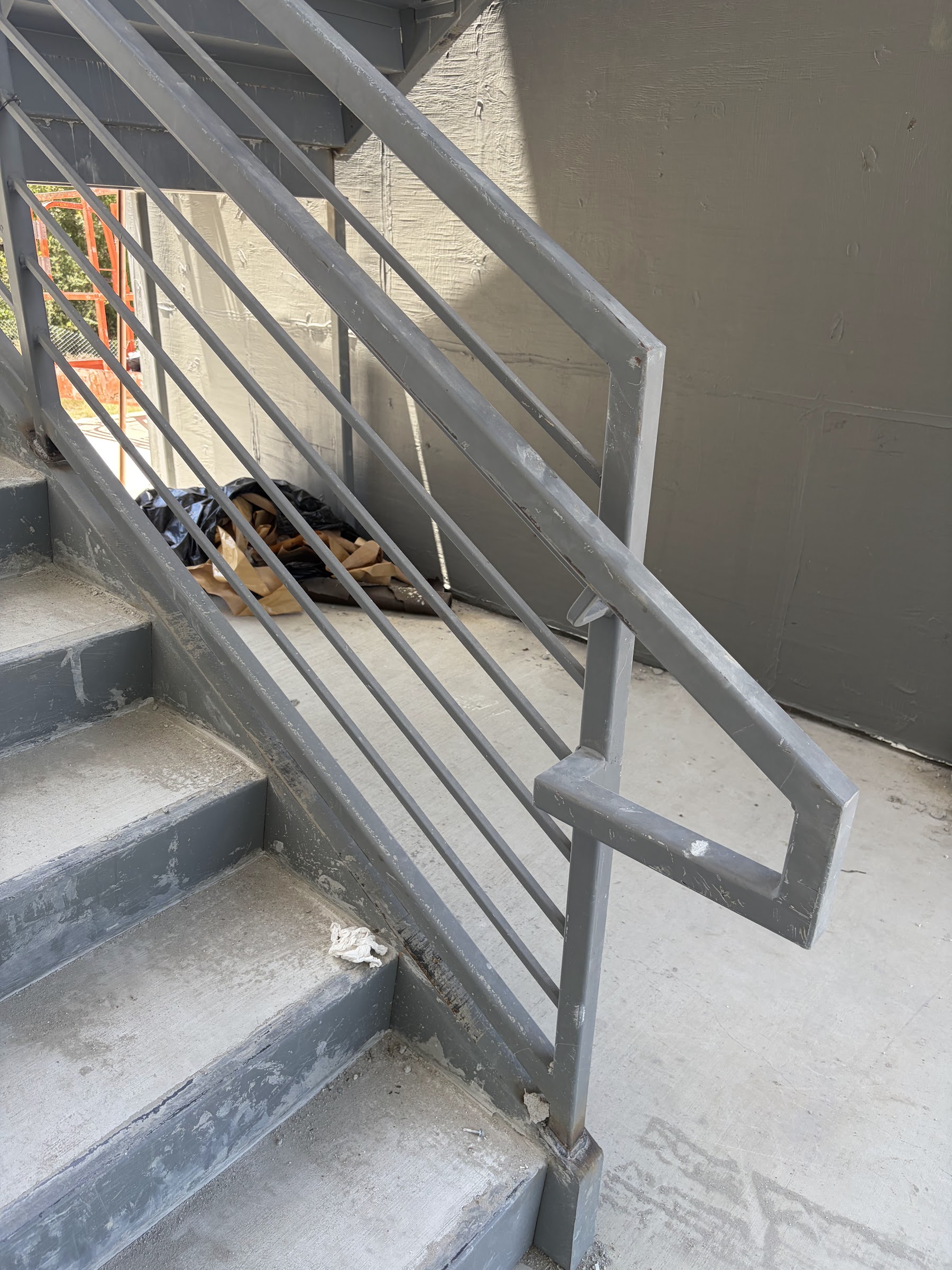
A guard is structure. The International Building Code requires handrails and guards to resist 50 pounds per linear foot along the top, or a single 200-pound load at any point, in any direction. The two loads are checked separately, not added together (International Code Council, 2021, Section 1607.8.1). That load travels from the top rail, down the posts, and into the slab or stair stringer. The weld at the base of each post and the anchors beneath it decide whether the rail holds. That is fabrication work, done in the shop before the rail ever reaches the job.
A bollard is steel and concrete working together
A pipe bollard is usually a steel pipe set in a concrete footing and filled with concrete. It stands guard in parking lots, at storefronts, at warehouses and along drive lanes (TrafficGuard, n.d.). A filled pipe is a fixed barrier, not an engineered crash barrier. Rated protection takes engineering, testing and the right installation (TrafficGuard, n.d.). The plans say which one a job needs. The sub builds exactly what the plans call for.
What to send for a misc metals bid
Send the full plan set, not just the structural sheets. Misc metals hide on the architectural, civil and mechanical pages. Add the metal fabrications specification, every addendum, and the bid date. A good misc metals sub reads every sheet, counts every piece, and returns a scope that names what is in and what is not.
The main frame holds a building up. Misc metals make it usable: the stair you climb, the rail you lean on, the post that stops a bumper before it reaches the door.
Quick answers
Is misc metals the same as structural steel?
No. Structural steel is the frame: columns, beams and the bracing that holds the building up. Misc metals are the stairs, rails, ladders, bollards, loose lintels and supports around that frame (AISC, 2022).
Who installs loose lintels?
On many jobs the metals sub furnishes them and the mason sets them in the wall. The specification says which. Read the metal fabrications and masonry sections together (University of Houston, n.d.).
What load does a commercial guard rail have to carry?
50 pounds per linear foot along the top, or a single 200-pound load at any point, in any direction, checked separately (International Code Council, 2021).
Have a bid coming up?
Send the plans and the bid date. We read every sheet and send back a clear scope.
(512) 508-7765Send the plansReferences
American Institute of Steel Construction. (2022). Code of standard practice for steel buildings and bridges (ANSI/AISC 303-22). https://www.aisc.org/publications/steel-standards/aisc-303/
International Code Council. (2021). International building code, Section 1607.8, Loads on handrails, guards, grab bars and seats.
TrafficGuard. (n.d.). Steel vs. concrete-filled bollards: Which is better? https://www.trafficguard.net/blog/steel-vs-concrete-filled-bollards
University of Houston. (n.d.). Section 05 50 00: Metal fabrications [Master specification]. https://uh.edu/facilities-planning-construction/vendor-resources/owners-design-criteria/master-specs/